Signed in as:
filler@godaddy.com
Signed in as:
filler@godaddy.com
Rapid population growth among certain wildlife species is placing pressure on ecosystems and agricultural and public lands. SpayVac vaccines offer a humane and scalable approach to long-term wildlife fertility control.
As human populations grow, wildlife is increasingly confined to smaller, fragmented islands of habitat. Many species, even endangered and local ones, can exceed carrying capacity and reduce biodiversity and ecosystem resilience by monopolizing resources, spreading infectious diseases, and altering species composition. Traditional methods—culling, surgery, short-term contraceptives—are costly, controversial, or impractical at scale.
SpayVac offers humane and effective options for wildlife management.
Proven 80-100% efficacy for multiple years with a single dose in:
- Grey seals
- Fallow deer
- White-tailed deer
- Black-tailed deer
- Red deer
- Horses
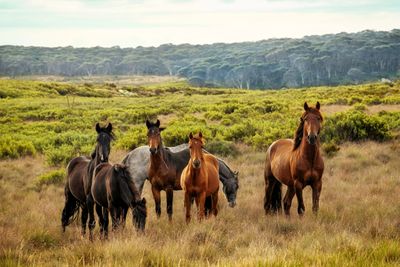
The challenge: Feral horse populations in the U.S. can grow at 20% or more annually. The U.S. Bureau of Land Management (BLM) manages free-roaming equids by removing animals from the range and occasionally applying fertility control measures. The majority of horses that are removed are sent to long-term holding facilities. In March 2026, approximately 58,274 horses and burros were held in off-range corrals and pastures by the BLM and cost $101 million USD to maintain (66% of the total program’s FY2024 budget). As of March 1, 2026, the nationwide on-range wild horse and burro population estimate was 85,466—over three times the mandated appropriate management level of 25,592.
Published research:
Ongoing trials:

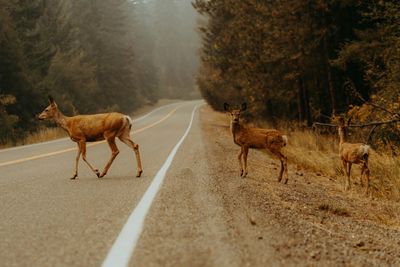
The challenge: Too many deer can contribute to animal-vehicle collisions, spread tick-borne diseases, decimate ornamental plants, and cause extensive damage to agricultural crops.
Published research:

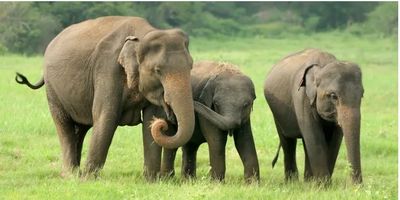
The challenge: Too many elephants living near people can destroy crops, raid food stores, damage infrastructure, and cause injury and loss of human life.
Published research:
Ongoing trials:

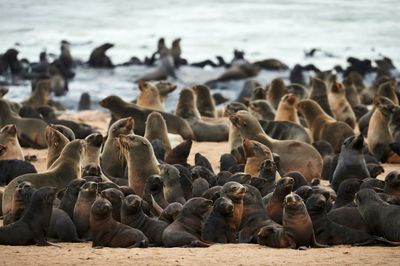
The challenge: Overabundant seal populations can negatively impact marine fish population dynamics.
Published research:

SpayVac-pZP for equids and cervids is undergoing the approval process to become registered with the U.S. Environmental Protection Agency. SpayVac vaccines can be used for research with an Experimental Use Permit. Reach out to learn more.
1. Fertility control options for management of free-roaming horse populations. Bechert U, Turner Jr, J, Baker D, Eckery D, Bruemmer J, Lyman C, Prado T, King S, Fraker M. 2022. Human-Wildlife Interactions 16(2):1-38.
2. Twenty years of SpayVac® research: Potential for regulating feral horse and burro populations in the U.S. Bechert U, Fraker M. 2018. Human Wildlife Interactions 12(1):117-130.
3. IgG4/7 responses correlate with contraception in mares vaccinated with SpayVac. Bechert U, Rohde J, Freer H, Wagner B. 2018. Theriogenology 121:168-174.
4. Efficacy of SpayVac® as a contraceptive in feral horses. Roelle JE, Germaine SS, Kane AJ, Cade BS. 2017. Wildlife Society Bulletin 41(1):107-115.
5. Effects of two porcine zona pellucida immunocontraceptive vaccines on ovarian activity in horses. Bechert U, Bartell J, Kutzler M, Menino Jr, A, Bildfell R, Anderson M, Fraker M. 2013. Journal of Wildlife Management 77(7):1386-1400.
6. Four-year contraception rates of mares treated with single-injections porcine zona pellucida and GnRH vaccines and intrauterine devices. Killian G, Thain D, Diehl N, Rhyan J, Miller L. 2008. Wildlife Research 35(6):531-539.
7. Achieving population goals in a long-lived wildlife species (Equus caballus) with contraception. Kirkpatrick JF, Turner A. 2008. Wildlife Research 35:513-519.
8. Immunocontraception and increased longevity in equids. Kirkpatrick FJ, Turner A. 2007. Zoo Biology 26(4):237-44.
9. Effectiveness of SpayVac® for reducing white-tailed deer fertility. Locke SL, Cook MW, Harveson LA, Davis DS, Lopez RR, Silvy NJ, Fraker MA. 2007. Journal of Wildlife Diseases 43(4):726-730.
10. Effects of SpayVac® on urban female white-tailed deer movements. Hernandez S, Locke SL, Cook MW, Harveson LA, Davis DS, Lopez RR, Silvy NJ, Fraker MA. 2006. Wildlife Society Bulletin 34(5):1430-1434.
11. Long-lasting, single-dose immunocontraception of feral fallow deer in British Columbia. Fraker MA, Brown RG, Gaunt GE, Kerr JA, Pohajdak B. 2002. Journal of Wildlife Management 66(4):1141-1147.
12. Factors contributing to the success of a single-shot, multiyear pZP immunocontraceptive vaccine for white-tailed deer. Miller LA, Fagerstone KA, Wagner DC, Killian GJ. 2009. Human-Wildlife Interactions 3(1):103-115.
13. Velling M, Peters A, Ferry N, Bechert U, Göritz F, Schwarzenberger F, Mysterud A, Müller J, Heurich M. 2025. One-time administration of SpayVac® vaccine successfully prevents pregnancy in red deer (Cervus elaphus) in a temperate forest ecosystem. European Journal of Wildlife Research 71(113):1-12.
14. The response of African elephants to a single-dose of SpayVac®, a pZP contraceptive vaccine, over a 7-year period. Bechert U, Fraker M. 2016. Pachyderm 57:97-108.
15. Implementing immunocontraception in free-ranging African elephants at Makalali Conservancy. Delsink A, van Altena J, Grobler D, Bertschinger H, Kirkpatrick J, Slotow R. 2007. Journal of South African Veterinary Association 78:25–30.
16. How immunocontraception can contribute to elephant management in small, enclosed reserves: Munyawana population as a case study. Druce H, Mackey R, Slotow R. 2011. PLoS ONE 6:e27952.
17. Contraceptive potential of the porcine zona pellucida vaccine in the African elephant (Loxodonta africana). Fayrer-Hosken R, Bertschinger H, Kirkpatrick J, Grobler D, Lamberski N, Honneyman G, Ulrich R. 1999. Theriogenology 52:835–846.
2. Twenty years of SpayVac® research: Potential for regulating feral horse and burro populations in the U.S. Bechert U, Fraker M. 2018. Human Wildlife Interactions 12(1):117-130.
18. Evidence for a long-lasting single administration vaccine in wild grey seals. Brown RG, Bowen WD, Eddington JD, Kimmins WC, Mezei M, Parson JL, Pohajdak B. 1997. Journal of Reproductive Immunology 35(1):43–51.
19. Temporal trends in antibody production in captive grey, harp and hooded seals to a single administration of immunocontraceptive vaccine. Brown RG, Bowen WD, Eddington JD, Kimmins WC, Mezei M, Parsons JL, Pohajdak B. 1997. Journal of Reproductive Immunology 35(1):53–64.